from 0 review
Any Duration
Daily Tour
Unlimited
Any Preferred Language
SPIRITUL AND WELLNESS
Buddhism
The Buddhist way of life of peace, loving kindness and wisdom is just as relevant today as it was in the past. Buddha explained that all our problems and suffering arise from confused and negative states of mind, and that all our happiness and good fortune arise from peaceful and positive states of mind. He taught methods for gradually overcoming our negative minds such as anger, jealousy and ignorance, and developing our positive minds such as love, compassion and wisdom. Through this we learn to experience lasting peace and happiness.
Buddhist Prayer
The purpose of Buddhist prayer is to awaken our inherent inner capacities of strength, compassion and wisdom rather than to petition external forces based on fear, idolizing, and worldly and/or heavenly gain. Buddhist prayer is a form of meditation; it is a practice of inner reconditioning. Buddhist prayer replaces the negative with the virtuous and points us to the blessings of Life.
For Buddhists, prayer expresses an aspiration to pull something into one’s life, like some new energy or purifying influence and share it with all beings. Likewise, prayer inspires our hearts towards wisdom and compassion for others and ourselves. It allows us to turn our hearts and minds to the beneficial, rousing our thoughts and actions towards Awakening. If we believe in something enough, it will take hold of us. In other words, believing in it, we will become what we believe. Our ability to be touched like this is evidence of the working of Great Compassion within us.
Meditation
Meditation is at the heart of the Buddhist way of life. It is basically a method for understanding and working on our own mind. We first learn to identify our different negative mental states known as ‘delusions’, and learn how to develop peaceful and positive mental states or ‘virtuous minds’. Then in meditation we overcome our delusions by becoming familiar with virtuous minds. Out of meditation we try to maintain the virtuous minds we have developed and use our wisdom to solve the problems of daily life. As our mind becomes more positive our actions become more constructive, and our experience of life becomes more satisfying and beneficial to others. Anyone can learn basic meditation techniques and experience great benefits, but to progress beyond basic meditation requires faith in the Three Jewels – Buddha, Dharma and Sangha. Usually people find this develops naturally as they experience the benefits of their meditation practice.
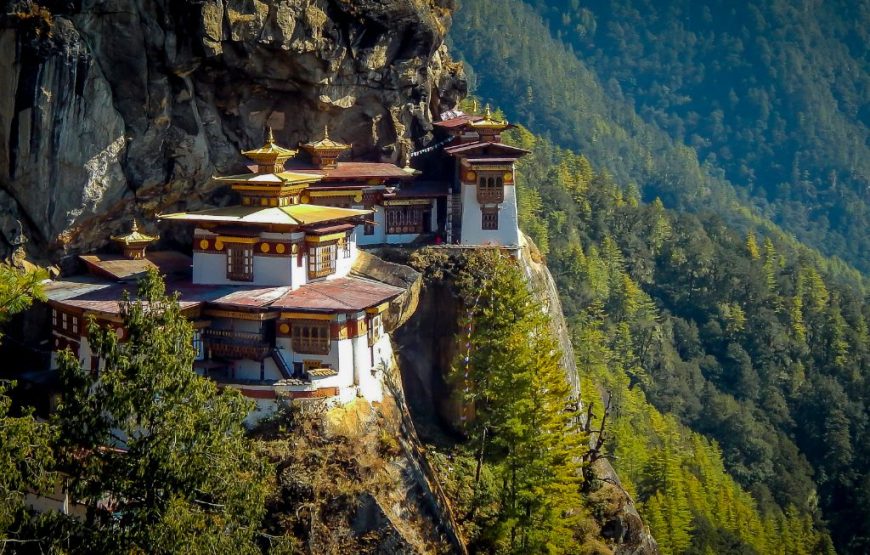
As one of the last strongholds of Vajrayana Buddhism, meditation and mediation retreats are a common practice amongst Monks and Buddhist practitioners in Bhutan. Small retreat centers and hermitages are located all over the country, usually next to temples, monasteries and monastic schools.
These retreats and meditation centers provide places of respite from the cares and stress of everyday life. Devout Buddhists often venture into the mountains for months at a time to meditate. The retreats provide practitioners with the opportunity to draw upon their inner self and meditate upon the purpose of life.
Many tourists come to Bhutan for meditation and retreat tours. Some itineraries include serious meditation programs that last for days while others offer solitary retreats for few hours in the high hills and temples where the serenity and beauty of nature can be appreciated in undisturbed silence.
Tour Operators can include meditation programs in your itinerary if you are interested in trying this Bhutanese way of retreat. Additionally most hotels also provide yoga sessions, retreats and meditation facilities within the hotel premises.
Bhutan is a year-round destination. There are four seasons: summer (June to August), autumn (September to November), winter (December to February) and spring (March to May). But because of the range of altitudes in the country, and the influence of the north Indian monsoons, the climate is incredibly varied.
In the south, the humid, subtropical climate is fairly consistent year-round, with temperatures between 15oC and 30oC. Central Bhutan, with its temperate forests, has a more seasonal climate, with warm summers and cool, dry winters. The northern regions are much colder during winter. Because of the high altitude, mountain peaks are snowy year-round and the lower reaches remain cool in summer.
In summer, the Indian monsoon season runs from late June or July to late September, mostly affecting the southern regions. Most farming activities take place in the summer, when crops thrive in verdant landscapes.
Autumn, from late September or early October to late November, follows the rainy season. It is characterised by bright, sunny days and some early snowfall at higher elevations. It’s the season of feasts and festivals as farmers reap the fruits of their work.
From late November until March, the crisp, clear and sunny winter sets in, with frost throughout much of the country and snowfall common above elevations of 3,000 metres. The winter northeast monsoon brings gale-force winds at the highest altitudes through high mountain passes, giving Bhutan the name Drukyul, which means Land of the Thunder Dragon in Dzongkha (Bhutan’s national language).
Bhutan’s generally dry spring starts in early March and lasts until mid-April. It is a botanist’s delight, with nature in full bloom. Summer weather commences in mid-April with occasional showers and continues to late June.
If you would like to book completely independently, there are plenty of online resources for inspiration, research and booking – including this website. There are lots of experienced, accredited tour operators that can help you too. Please check our website https://services.bhutan.travel/ for a full list of DOT-certified Tour Operators, hotels and guides.
Our host team is also on hand to help provide you with information as you plan your journey.
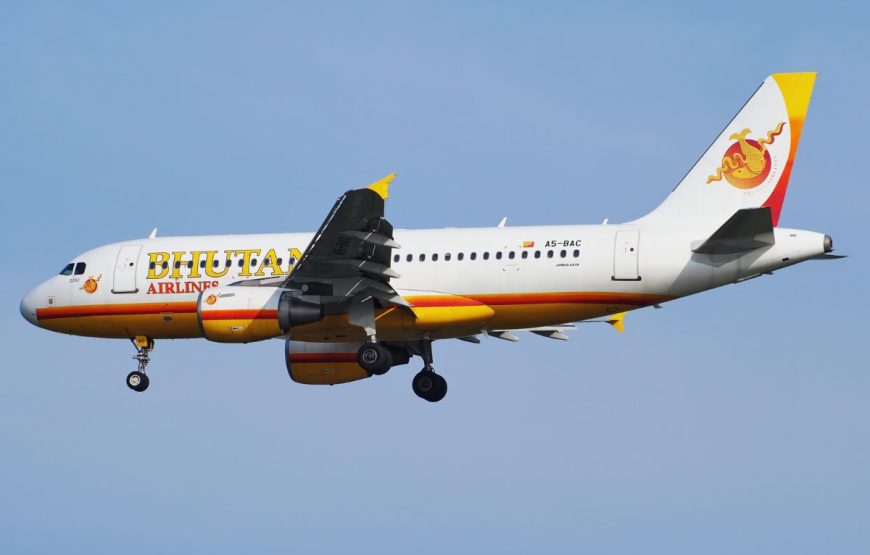
The country has one international airport located in Paro. Flights operated by Drukair and Bhutan Airlines arrive and depart from destinations including Bangkok, Delhi, Kolkata, Bagdogra, Bodhgaya, Dhaka, Kathmandu, Guwahati and Singapore. Private jets or charters can fly into Bhutan after obtaining the relevant approvals.
There are also domestic airports in Yonphula in eastern Bhutan, Bumthang in central Bhutan, and Gelephu in south-central Bhutan.
There are no rules about what visitors should wear. However if you are planning to visit places of religious significance, respectful smart-casual clothing that covers your body from shoulders to knees is appropriate and appreciated.